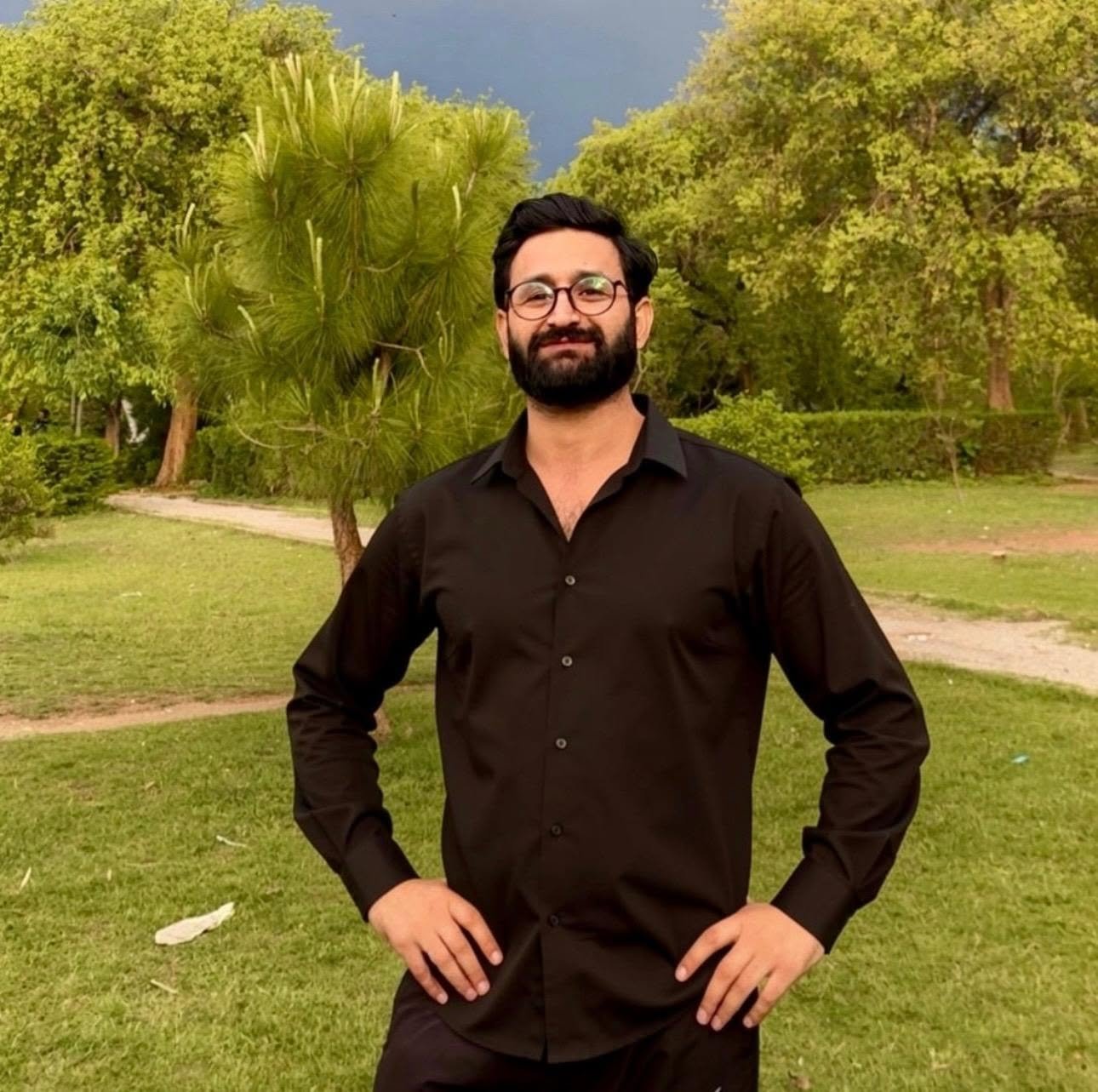
Shah Fahad
Data Management • Research & Analysis • Monitoring, Evaluation & Reporting
Shah Fahad is a data management, research, and monitoring professional with experience spanning data management, field data collection, data quality assurance, statistical analysis, research, monitoring, evaluation, and programme reporting. He currently serves as a Data Management and Reporting Officer at Developments in Literacy (DIL), where he manages programme databases, analyses education programme data, develops dashboards and automated reports, conducts data validation and quality assurance, and supports evidence-based decision-making. His professional experience includes roles with Community World Service Asia, Oxford Policy Management, Help Humanity Organization, Alumni Impact Award, PIDE, and RSPN, covering humanitarian response, development programmes, policy research, education, community engagement, and field research. He has experience designing data collection tools, conducting FGDs, KIIs, IDIs, surveys and community assessments, managing and cleaning datasets, developing monitoring systems, and preparing analytical reports, policy briefs, donor reports, and research outputs. He is proficient in Microsoft Excel, SPSS, Power BI, data visualization, research methodologies, stakeholder coordination, programme documentation, and evidence-based analysis. With an MPhil in Economics from PIDE, he combines quantitative and qualitative research capabilities with practical field experience to support data-driven programme improvement, policy research, monitoring, evaluation, and evidence-based decision-making.
Manage, clean, validate, and maintain programme datasets while ensuring accuracy, consistency, completeness, and data integrity.
Analyze quantitative datasets to identify trends, generate insights, and prepare clear analytical reports for decision-making.
Develop interactive dashboards, pivot tables, and automated reports to support programme monitoring and data utilization.
Design data collection tools and conduct surveys, interviews, focus group discussions, and field research activities.
Support monitoring and evaluation activities through field monitoring, indicator tracking, beneficiary verification, and data analysis.
Conduct FGDs, KIIs, IDIs, stakeholder consultations, and field observations to collect and analyze qualitative evidence.
Analyze survey and programme datasets using Microsoft Excel and SPSS to identify patterns, trends, and evidence-based insights.
Create data visualizations and reporting dashboards to communicate programme performance and analytical findings effectively.
Support research studies through methodology development, stakeholder mapping, Theory of Change, data analysis, and policy-oriented reporting.
Prepare monitoring summaries, programme reports, donor reports, data summaries, and supporting documentation for development projects.
Conduct community assessments, household surveys, beneficiary consultations, and field research to identify needs and vulnerabilities.
Manage project databases, data entry systems, templates, records, and reporting workflows to support effective programme implementation.
Support the preparation of humanitarian and development project proposals, concept notes, budgets, and donor deliverables.
Coordinate with communities, government representatives, donors, partners, schools, and programme stakeholders to support project implementation.
Prepare research reports, policy briefs, working papers, project documentation, and evidence-based summaries for stakeholders.
Manage programme data for education interventions, analyze datasets to identify trends and monitor performance indicators, develop dashboards and automated reports, conduct data validation and quality assurance, maintain scholarship beneficiary and alumni databases, coordinate with schools and stakeholders, support student outreach, and prepare monitoring and donor reports.
Supported humanitarian project implementation, conducted field monitoring visits, facilitated food and cash assistance distributions, carried out community assessments and household surveys, supported beneficiary identification and verification, collected and validated monitoring data, and assisted in developing field data collection and monitoring tools.
Supported evaluation of the Warsak HEPS 2nd Rehabilitation Project by contributing to the evaluation framework and methodology, stakeholder mapping, Theory of Change reconstruction, risk assessment, qualitative data collection tools, stakeholder consultations, field visits, analysis of findings, and preparation of the final scoping report.
Supported development of humanitarian and development project proposals, concept notes and donor reports; managed and reviewed field data; coordinated project monitoring and donor deliverables; developed data entry templates and project updates; integrated financial information into proposals; coordinated with donors and stakeholders; and documented lessons learned.
Developed data collection tools, managed data collection and entry, conducted data validation and quality checks, cleaned and analyzed datasets using Microsoft Excel and SPSS, prepared tables, charts and reports, generated evidence-based recommendations, coordinated with stakeholders, and facilitated training and awareness sessions related to research and monitoring.
Conducted qualitative field research on traditional housing systems and climate-resilient construction practices through community consultations, field observations and stakeholder interviews, and analyzed construction materials, environmental sustainability and disaster resilience.
Supported quantitative and qualitative research projects, conducted KIIs, FGDs and household interviews, designed research methodologies and data collection instruments, managed research data and documentation, analyzed datasets using SPSS and Microsoft Excel, and prepared policy briefs, working papers and research reports.
Supported implementation of a European Union-funded reintegration project, assisted with field data collection and data management for returnee communities, prepared business plans and livelihood recommendations, and developed monthly monitoring records, programme documentation and beneficiary success stories.
Supported the evaluation of the Warsak HEPS 2nd Rehabilitation Project funded by the European Union and French Development Agency, including evaluation methodology, stakeholder mapping, Theory of Change reconstruction, risk assessment, qualitative data collection, field visits, and analysis of evaluation findings.
Managed data collection, validation, cleaning and analysis for research on menstrual hygiene management among adolescent girls, using Microsoft Excel and SPSS to generate findings, reports, and data-based recommendations for interventions in Gilgit-Baltistan.
Conducted qualitative field research on traditional housing systems and climate-resilient construction practices through community consultations, field observations and stakeholder interviews, with analysis of construction materials, environmental sustainability and disaster resilience.
Supported humanitarian response activities for flood-affected households through field monitoring, community assessments, household surveys, beneficiary identification and verification, and distribution of food items, multipurpose cash assistance and dignity kits.
Managed programme data for education interventions, including database management, data validation, performance analysis, dashboard development, automated reporting, scholarship beneficiary tracking, and preparation of monitoring and donor reports.
Supported development of humanitarian and development project proposals, concept notes and donor reports while integrating programme data, budgets, financial information, stakeholder inputs, and lessons learned.
Supported quantitative and qualitative research projects through research methodology design, KIIs, FGDs, household interviews, data management, SPSS and Excel analysis, and preparation of policy briefs, working papers and research reports.
Supported implementation of a European Union-funded reintegration project through field data collection, data management, beneficiary business planning, livelihood recommendations, monitoring records, programme documentation and beneficiary success stories.
Professional Board
Professional Board
Professional Board
Professional Board
Professional Board
Google / Coursera
Google / Coursera
Coursera
Coursera
Coursera
"Shah Fahad demonstrates strong analytical and data management skills. His ability to organize, validate, and analyze programme data contributes effectively to informed decision-making and programme monitoring."
"His experience in qualitative and quantitative research, data collection, and analysis makes him a valuable contributor to research and evaluation assignments. He approaches fieldwork and data management with attention to quality and detail."
"Shah Fahad has demonstrated practical skills in monitoring, data validation, reporting, and dashboard development. He is able to transform programme data into useful information for tracking performance and supporting programme improvements."
"He works effectively with communities, programme teams, government representatives, and other stakeholders. His field data collection and coordination skills support smooth implementation and accurate project documentation."
"Shah Fahad combines research knowledge with practical data management capabilities. His experience with Excel, SPSS, data cleaning, validation, visualization, and reporting enables him to support evidence-based programme activities."
"His ability to manage databases, prepare reports, develop data collection tools, and coordinate with stakeholders makes him a dependable contributor to education and community development programmes."
No publication records have been added yet.
No media appearance records have been added yet.
Please wait a moment while we update your data.